
 Michael Turner
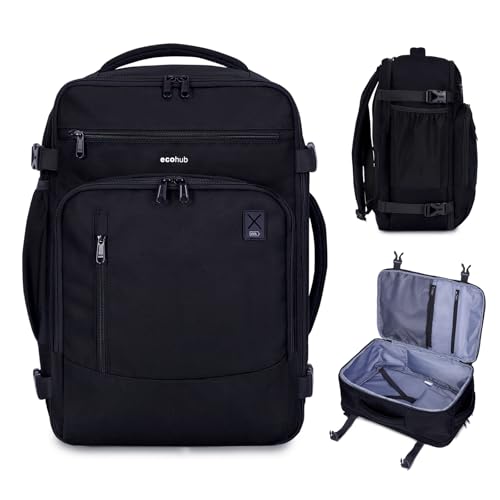
Choose a standard day pack around 16.7 in. tall × 13 in. wide × 8.5 in. deep (42.5 × 33 × 21.5 cm) for everyday school or commute use; that profile comfortably carries a 13″ laptop, a notebook folder and small extras. For carrying a 15″ laptop, select a taller model in the 18–19 in. height range (46–48 cm) with a 10–12 in. depth to keep the device and chargers organized.
Typical size categories: compact day packs – ~14–17 in. tall (35–43 cm), 10–20 L; standard school packs – ~16–19 in. tall (42–48 cm), 20–30 L; large/overnight packs – ~19–22 in. tall (48–56 cm), 30–45 L. Use these ranges to match volume needs: light daily carry (10–20 L), full course load (20–30 L), short trip or heavy textbooks (30–45 L).
Measure your torso from the C7 vertebra to the top of the hip belt and compare to pack height: the central pocket should sit below the C7 and the hip belt should align with the top of your pelvis. For laptop compatibility, check the sleeve diagonal and add 1–2 in. (2.5–5 cm) clearance for padding and accessories. If you plan to add binders or a lunch, increase depth by 2–3 in. and volume by ~5–10 L.
Recommendation summary: for everyday students pick the ~16.7 in. × 13 in. × 8.5 in. profile; upgrade to ~18–19 in. height for 15″ laptops or heavier textbook loads; choose 30+ L and 19–22 in. height for travel or extended carrying.

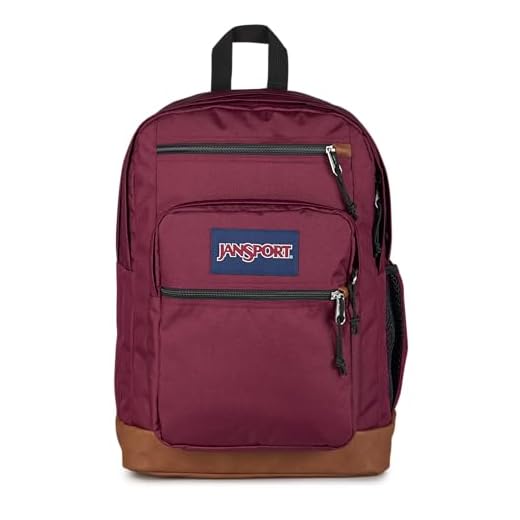
Standard dimensions for popular school packs
Recommendation: pick the SuperBreak for everyday carry – 16.7″ H × 13″ W × 8.5″ D; pick the Big Student for textbooks and a laptop – 19″ H × 13″ W × 8.5″ D; pick the Half Pint for kids – 13″ H × 10″ W × 5″ D.
| Model | Height | Width | Depth | Approx. volume |
|---|---|---|---|---|
| SuperBreak | 16.7″ | 13″ | 8.5″ | ~25 L |
| Right Pack | 16.7″ | 13″ | 8.5″ | ~27 L |
| Big Student | 19″ | 13″ | 8.5″ | ~34 L |
| Half Pint | 13″ | 10″ | 5″ | ~11 L |
| Cool Student | 17.8″ | 13.5″ | 8.5″ | ~30 L |
Fit notes: a 15″ laptop usually requires a pack at least 17″ in height with a padded sleeve; textbook-heavy loads benefit from reinforced straps and a sternum strap. For children under 5 choose the Half Pint or models listed with heights under 14″. For travel carry-on, target models ≤18″ H to meet most airline small-item limits.
Accessories: pair a kid-sized model with a lightweight stroller such as the best value double umbrella stroller for short outings; for periodic deep cleaning use equipment like the best pressure washer for house short pump va.
Which dimensions to measure: height, width, depth
Measure external height, width and maximum depth with a flexible tape and record values in in.; include pockets and protrusions when checking exterior fit, exclude shoulder straps from height unless the strap forms part of the carrying profile.
Step-by-step measurement
Height: place the bag upright on a flat surface and measure from the base to the highest fixed point of the body (exclude removable straps and folded handles).
Width: measure across the front at the widest point, keeping the tape level and straight; if the front has an expanding pocket, measure with it fully expanded and also flattened if you need both fits.
Depth: measure from front face to back face at the bag’s deepest section while it’s empty and then again lightly packed (soft items inside) to capture realistic bulge. Record the larger value for exterior clearance and the smaller for compressed storage.
Practical numbers and tips
Typical small day models: height 16–18 in., width 12–14 in., depth 6–9 in. School/commuter sized: height 18–20 in., width 13–15 in., depth 8–10 in. Carry-on target for most airlines: keep height ≤22 in., width ≤14 in., depth ≤9 in.; use linear size = H + W + D and round each measurement up to the nearest 0.5 in. for safety.
For laptop pocket fit: measure the device’s length and width, then compare with internal pocket dimensions; allow ~0.5–1 in. clearance in both directions. When documenting dimensions for storage, shipping or airline rules, provide the external measurements (expanded) and note a compressed set separately.
Typical sizes for popular SuperBreak, Right Pack and Big Student models
Recommendation: choose SuperBreak for compact everyday carry (approx 16.5 in. / 42 cm tall), Right Pack for a classic school rig with a laptop sleeve (approx 16.8 in. / 42.5 cm tall) and Big Student when you need extra room for books (approx 17.5 in. / 44.5 cm tall).
SuperBreak – Typical exterior: 16.5 in. (42 cm) H × 12.5 in. (32 cm) W × 8 in. (20 cm) D. Volume ~25 L. No built-in padded laptop compartment; fits a slim 13″ device with a sleeve. Best for light daily loads, commuting with a tablet, or elementary/middle school use.
Right Pack – Typical exterior: 16.8 in. (42.5 cm) H × 13 in. (33 cm) W × 8.5 in. (21.5 cm) D. Volume ~30 L. Features a padded 15″ laptop sleeve in the main compartment. Recommended for high-school or college students who carry a laptop plus notebooks; leaves room for a water bottle and lunch.
Big Student – Typical exterior: 17.5 in. (44.5 cm) H × 13.5 in. (34 cm) W × 8.5–9 in. (21.5–23 cm) D. Volume ~34 L. Padded sleeve for up to 15″ laptops, larger main compartment for binders and multiple textbooks. Choose this when you regularly transport heavy or bulky items.
Convert centimeters to ″ (quick math)
Multiply the centimeter value by 0.393701 (or divide by 2.54) to get the measurement in ″; use 0.394 for fast estimates.
Rounding rules: for external dimensions round to nearest 0.5″; for internal capacity or device fit round up by 0.5–1.0″ to allow clearance.
Mental shortcuts: cm × 0.4 ≈ quick estimate (slightly high); cm ÷ 2.54 = exact conversion.
Examples (cm → ″): 15 cm → 5.91″; 20 cm → 7.87″; 30 cm → 11.81″; 40 cm → 15.75″; 45 cm → 17.72″; 50 cm → 19.69″.
When comparing product specs: convert both width and depth the same way, then add clearance (0.5–1.0″ per side for sleeves or padded compartments) before judging fit.
Measure laptop sleeve for 13″–17″ devices
Choose a sleeve with internal width 0.4″–0.8″ greater than your laptop’s left‑to‑right dimension, internal depth (front‑to‑back) 0.2″–0.6″ greater, and internal thickness allowance equal to device height plus 6–10 mm of padding; add 0.1″–0.2″ for zipper or flap seams.
Common device footprints and recommended internal sleeve sizes:
13.3″ – device ≈ 11.97″ × 8.36″ × 0.63″; sleeve ≈ 12.6″–12.8″ × 8.6″–9.0″ × 0.9″–1.0″.
14″ – device ≈ 12.31″ × 8.71″ × 0.61″; sleeve ≈ 12.7″–13.1″ × 9.0″–9.3″ × 0.9″–1.0″.
15.6″ – device ≈ 13.75″ × 9.50″ × 0.78″; sleeve ≈ 14.1″–14.6″ × 9.8″–10.1″ × 1.0″–1.2″.
16″ – device ≈ 14.09″ × 9.68″ × 0.66″; sleeve ≈ 14.5″–15.0″ × 9.9″–10.3″ × 1.0″–1.2″.
17″ – device ≈ 15.50″ × 10.40″ × 1.00″; sleeve ≈ 15.9″–16.3″ × 10.6″–11.0″ × 1.2″–1.4″.
If the laptop is inside a hard or thin protective shell, increase sleeve internal dimensions by 0.2″–0.5″; for thick rubber/impact cases, increase by 0.5″–0.8″. For models with tapered edges, measure at the widest points including ports and hinges.
Padding guidance: 6 mm foam offers basic surface protection; 10–12 mm foam reduces impact transfer noticeably; layered foam (6 mm + 6 mm) or 14–16 mm total is advisable for frequent transit. Zippers, welded seams or gussets add bulk–factor +0.1″–0.2″ to the width or depth.
Fit check: with laptop powered off, slide it in along the shortest edge; if forced insertion requires more than a light snug, select the next size up or a sleeve with stretch/gusset. If you carry chargers or a mouse inside the same compartment, add 0.5″–1.0″ to depth per accessory.
Airline carry-on size limits and models that comply
Recommendation: aim for a bag no larger than 22″ × 14″ × 9″ to satisfy most major U.S. carriers; check carrier policy before travel.
- Major U.S. carriers (American, Delta, United): 22″ × 14″ × 9″ – SuperBreak: fits; Right Pack: fits; Big Student: usually fits but watch packed depth and external pockets.
- Southwest Airlines: 24″ × 16″ × 10″ – SuperBreak: fits easily; Right Pack: fits; Big Student: fits with room to spare for thicker packing.
- Alaska Airlines: 22″ × 14″ × 9″ – SuperBreak: fits; Right Pack: fits; Big Student: generally fits when not overstuffed.
- JetBlue: 22″ × 14″ × 9″ – SuperBreak: fits; Right Pack: fits; Big Student: fits but verify laptop compartment bulk.
- Spirit / Frontier (ultra-low-cost): 22″ × 18″ × 10″ – policies vary by fare class and fees apply; SuperBreak/Right Pack/Big Student fit the dimensional limits but may incur a carry-on fee if not included with fare.
- European standard (typical): 55 cm × 40 cm × 20 cm ≈ 21.7″ × 15.7″ × 7.9″ – SuperBreak and Right Pack usually compliant; Big Student may exceed the depth allowance on stricter carriers, check cabin rules.
- International widebody flights (some Asian and Middle Eastern carriers): permitted sizes range from 22″ × 14″ × 9″ up to 22″ × 15″ × 9.5″ – confirm with the specific airline; model fit depends on packed volume.
Practical checks before the gate:
- Measure bag fully packed (height × width × depth) using a ruler or tape; use quotation mark (“) to compare with carrier numbers.
- Compress soft-sided packs; if depth exceeds limit only by a small amount, soft fabric often allows a few centimeters of squeeze at the gate.
- Account for external items (water bottles, tripods, jacket stuffed into straps) – these can push dimensions past the limit.
- If laptop or tablet adds significant bulk, place it inside during measurement rather than in a sleeve that extends beyond the profile.
- For low-cost carriers, treat any of the listed models as potentially subject to a carry-on fee even when dimensions comply; prepaying fees and checking policy avoids surprises.
- If in doubt, use the model as a personal item (under-seat) on restrictive fares when allowed; measure against the carrier’s personal-item limit.
Measure strap drop and torso length for comfortable fit
Recommended shoulder strap drop: 15–20 in. for adults; 12–16 in. for teens and smaller frames.
Quick measurement steps
- Stand upright; fasten any hip belt to move load onto pelvis.
- Locate C7 vertebra (most prominent neck bone) and the top of the iliac crest (hip bone).
- Measure torso length: run a tape or string from C7 down to the iliac crest. Record the distance in in.
- Put the load-bearing item on and tighten shoulder straps until it rests against the upper back. Measure strap drop: vertical distance from the top of the shoulder to the top edge of the main compartment or where the shoulder strap attaches. Record in.
Target ranges and fit cues
- Torso length categories:
- Petite: <15 in.
- Small/medium: 15–18 in.
- Long: >18 in.
- Strap drop targets:
- Petite/teen: 12–16 in.
- Average adult: 15–20 in.
- Taller frames: 18–22 in.
- Fit checklist:
- Top of the load sits 2–4 in. below C7.
- Load weight transfers to hips via a snug hip belt; shoulder straps only stabilize.
- Shoulder straps lie flat without gaps or pressure points; trim excess strap length.
- Sternum strap positioned mid-chest and adjusted for breathability and strap stability.
Use a tape measure or non-stretch cord plus a ruler for accuracy; add 0.5–1 in. tolerance for clothing layers and posture variation.