
 Michael Turner

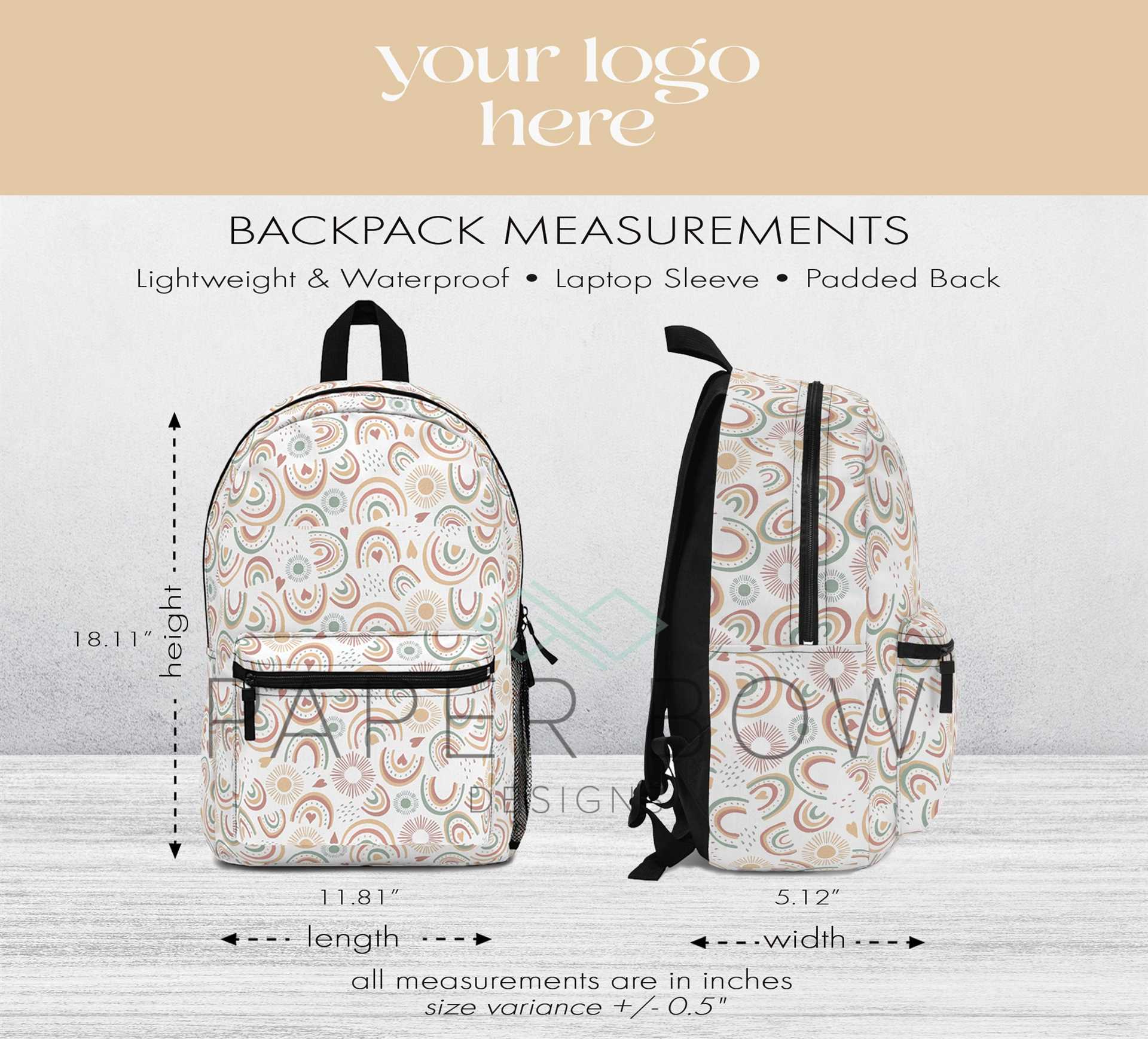
Main recommendation: Choose an 18–20 in (45–50 cm) tall × 12–14 in (30–35 cm) wide × 6–8 in (15–20 cm) deep pack for daily commuting and school use.
Volume guidance: 20–30 L for day-to-day essentials, 30–50 L for weekend hikes, 40–45 L commonly accepted for cabin carry-on by many carriers; verify airline limits before travel.
Airline external target: keep external measurements under 22 × 14 × 9 in (56 × 35 × 23 cm) to reduce risk of gate-check on most flights.
Fit guidance: match pack height to torso length measured from C7 vertebra to iliac crest. Typical torso ranges: short 16–18 in (41–46 cm), medium 18–20 in (46–51 cm), long 20–22 in (51–56 cm). Adjust shoulder straps and hipbelt so load sits centered over hips.
Laptop compartment sizes: allow 1–2 in (2.5–5 cm) clearance beyond device dimensions. For 13–14 in notebooks choose an internal sleeve ~14–15 in (35–38 cm) wide; for 15–16 in notebooks choose ~15–16.5 in (38–42 cm) sleeve. Measure device height and thickness before purchase.
Packing notes: place heavy items close to back panel and near hipbelt level, keep bulky items away from top. Aim for 60–70% weight transfer to hips, 30–40% handled by shoulder straps. For multi-day treks consider 50–65 L expedition packs instead of smaller daypacks.
Final quick tip: when possible test-fit a loaded pack for 10–15 minutes before purchase; small strap and sternum adjustments yield noticeable comfort gains.
Typical adult daypack size: height, width, depth
Target 18–22 in (46–56 cm) tall, 11–14 in (28–36 cm) wide, 6–10 in (15–25 cm) deep; volume ~20–30 L for general adult day use.
Commuting: 18–20 in tall, 11–12 in wide, 6–8 in deep; slim profile fits crowded transit and houses 13–15 in laptop sleeve. Hiking: 20–22 in tall, 12–14 in wide, 8–10 in deep; room for extra layers, food, 1 L hydration reservoir. Travel/light overnight: 20–22 in tall, 13–14 in wide, 8–10 in deep; fits 1–2 outfits plus toiletries.
Match torso length to back panel height; measure from C7 vertebra to iliac crest, then select pack with back panel within 1–2 in (2–5 cm) of that measurement. Hip belt should sit on iliac crest with minimal gap. Shoulder strap length and sternum strap placement influence load shift; adjust until load sits close to upper back. For compact rain storage choose a small umbrella: best folding umbrella pink purple. For interior fabric cleaning consult how to design a scrubber.
School bag sizes by age and torso length
For ages 3–5 choose height 30–36 cm (12–14 in), width 20–25 cm (8–10 in), depth 10–14 cm (4–5.5 in); volume 8–12 L; target torso length 28–33 cm (11–13 in); empty weight under 400 g.
Ages 6–8: height 35–40 cm (14–16 in), width 25–28 cm (10–11 in), depth 12–16 cm (5–6.5 in); volume 12–16 L; torso 33–38 cm (13–15 in); empty weight 400–600 g.
Ages 9–12: height 40–45 cm (16–18 in), width 28–32 cm (11–12.5 in), depth 15–20 cm (6–8 in); volume 18–22 L; torso 38–43 cm (15–17 in); empty weight 600–900 g; add padded hip belt for loads above 3–4 kg.
Teens 13–18: height 45–52 cm (18–20.5 in), width 30–35 cm (12–14 in), depth 18–25 cm (7–10 in); volume 22–30 L for day use, 30–40 L for sports or music kit; torso 43–53 cm (17–21 in); empty weight under 1.2 kg.
Measurement method
Measure torso from C7 vertebra (prominent neck bump) down to top of iliac crest (hip bone). Use that measurement to select pack height that sits between C7 and base of spine without extending below iliac crest.
Fit and load guidelines
Keep loaded weight under 10–15% of body mass; for preschool keep under 10%. Adjust shoulder straps so pack stays close to upper back with padded hip belt transferring load to hips when weight exceeds 3–4 kg. Chest strap set at mid-chest to prevent strap slippage. Look for padded back panel, adjustable sternum strap, and waist belt for heavy school loads. For laptops choose internal sleeve positioned close to back panel to reduce torque on spine.
Laptop compartment measurements for 13″, 15″, 17″ devices
Select an internal laptop sleeve sized at least 335 × 235 × 35 mm (W × H × D) for 13.3″ machines; 385 × 265 × 45 mm for 15.6″ models; 455 × 305 × 55 mm for 17.3″ notebooks.
Clearance and fit
Add 10–20 mm extra width and height beyond chassis measurements to allow for case edges and thermal vents. Add 10–30 mm extra depth when charger, dongles, or a thin protective case will sit inside sleeve. For ultra-thin notebooks under 15 mm thickness reduce depth margin to 10–15 mm.
Chassis ranges and protection tips
Typical chassis ranges: 13.3″ – 300–330 × 200–230 × 11–25 mm; 15.6″ – 350–380 × 235–260 × 15–30 mm; 17.3″ – 390–420 × 270–300 × 20–40 mm.
Use 4–8 mm foam or closed-cell padding along sleeve walls and 8–12 mm at base. Zippered closure preferred for secure hold; magnetic flap useful for quick access but verify retention with devices thicker than 25 mm. If power brick stored alongside laptop, allocate a separate pocket about 160 × 70 × 40 mm or fit a removable divider.
Measure device width hinge-to-hinge, height front-to-back, thickness at highest point including rubber feet; then add clearance margins listed above to pick correct sleeve size.
Carry-on size limits for major airlines and how to measure
Use a carry-on pack no larger than 22 x 14 x 9 in (56 x 36 x 23 cm) to meet requirements for most US legacy carriers and avoid gate checks or extra fees.
- American Airlines: 22 x 14 x 9 in (56 x 36 x 23 cm), including handles and wheels.
- Delta Air Lines: 22 x 14 x 9 in (56 x 36 x 23 cm), including handles and wheels.
- United Airlines: 22 x 14 x 9 in (56 x 36 x 23 cm), including handles and wheels.
- Alaska Airlines: 22 x 14 x 9 in (56 x 36 x 23 cm), including handles and wheels.
- Southwest Airlines: 24 x 16 x 10 in (61 x 41 x 25 cm).
- JetBlue: 22 x 14 x 9 in (56 x 36 x 23 cm).
- Spirit Airlines: 22 x 18 x 10 in (56 x 46 x 25 cm); carry-on fee commonly applies.
- Frontier Airlines: 24 x 16 x 10 in (61 x 41 x 25 cm); many fares include only a personal item.
- Most European carriers (example rule): 55 x 40 x 23 cm (21.7 x 15.7 x 9 in) for cabin allowance.
- Typical personal item allowance: roughly 18 x 14 x 8 in (45 x 35 x 20 cm) or must fit under seat in front.
- Empty pack and zip all compartments closed.
- Measure height from base to top, include any extended handle length.
- Measure width across widest point, include side pockets or external straps.
- Measure depth from front panel to back panel, include wheels or compression bumpers.
- Use a soft tape for curved surfaces or a rigid rule for flat measurement; round up to nearest full inch or centimeter.
- Measure while packed with typical contents since loaded size often gets checked at gate.
- If soft-sided material used, keep a note that some gate agents will use a rigid sizer box; a slightly smaller measured value may still be rejected.
- Tip: check each carrier’s policy for connecting flights and low-cost partners; size limits and fees vary by carrier and fare class.
- Tip: when uncertain, test fit pack inside a standard airline sizer (available at many airports) before departure.
- Tip: include handles and wheels in every measurement; external pockets count toward allowance on most airlines.
Measure torso and pack for proper fit
Measure torso length from C7 vertebra (prominent neck bone when head tilts forward) down to top of iliac crest; select harness length within ±1 cm (±0.4 in) of that figure so hip belt takes most load.
Torso measurement procedure
Stand upright with feet shoulder-width apart. Have helper locate C7 and mark with washable pen. Measure in straight line along spine to top of iliac crest (hip bone). Record result in centimeters and inches. Reference harness sizes: Small 38–43 cm (15–17 in), Medium 43–48 cm (17–19 in), Large 48–53 cm (19–21 in).
Pack fit verification and adjustments
Measure pack harness length by laying pack flat and measuring from center of shoulder strap attachment down to top center of hip belt pad. For adjustable harnesses, move anchor until measured harness length matches body measurement within ±1 cm. Hip belt circumference targets: Small 66–93 cm (26–36 in), Medium 76–107 cm (30–42 in), Large 91–122 cm (36–48 in).
On-body fit check: Fasten hip belt so padding sits squarely on iliac crests, buckle slightly above pubic bone. Tighten so 70–80% of load shifts to hips and 20–30% stays on shoulders. Shoulder straps should hug shoulders without pinching; allow 1–2 finger widths between collarbone and strap. Position load lifter straps at ~45° and sternum strap 4–7 cm (1.5–2.8 in) below collarbone for stability. Walk 5–10 minutes with typical load and fine-tune adjustment points until comfort and weight transfer match targets.
Liters to external measurements: calculate packing capacity
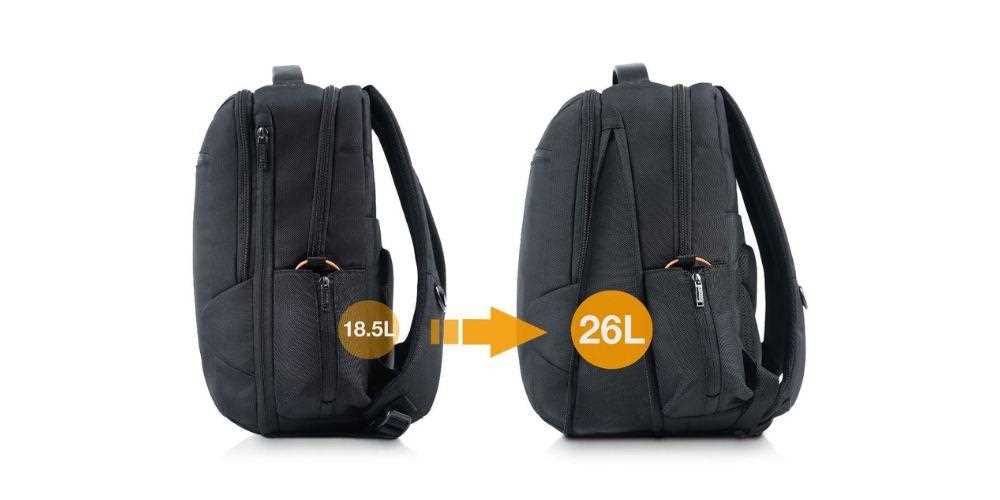
Measure external shell in centimeters at widest points (exclude shoulder straps, hipbelt; include main pocket and sewn-on pockets if estimating listed volume). Compute liters using: L = (H × W × D) / 1000, where H, W, D in cm.
For inches use conversion factor 0.016387: L = H_in × W_in × D_in × 0.016387. Example: 50 cm × 30 cm × 20 cm → (50×30×20)/1000 = 30 L. Example in inches: 20″×12″×8″ → 20×12×8×0.016387 ≈ 31.4 L.
Adjust raw cuboid result for internal shape and built-in features using packing efficiency factors: rigid-boxy shell: multiply by 0.90–1.00; tapered/contoured shell: multiply by 0.70–0.85; roll-top closure when rolled down: subtract 5–15% from measured H before calculation; heavy internal padding or large laptop sleeve: subtract 3–8 L depending on sleeve size.
Estimate laptop sleeve displacement by screen size: 13″ sleeve ≈ 1–2 L, 15″ sleeve ≈ 2–4 L, 17″ sleeve ≈ 4–6 L. Subtract this volume from computed total when planning clothing or sleeping system packing.
When accounting for external pockets: add pocket volume only if pocket expands beyond main compartment area. Measure pocket H×W×D separately and convert to liters using same formula, then add to main-compartment liters.
Allow margin for compression and bulky garments: for tightly compressible gear (down jacket, compressible sleeping bag) assume usable volume increases up to 10% compared with rigid packing; for bulky, noncompressible items (boots, helmet) assume usable volume decreases by 5–15% versus calculated figure.
Selecting pack size guideline using computed liters: day use with laptop+extras → 15–30 L; overnight with basic sleep kit → 30–45 L; two-to-three nights with clothing+sleeping pad → 45–65 L; organized multiweek travel or mountaineering with bulky kit → 65+ L. Adjust choice after applying shape, sleeve and pocket adjustments described above.